We Hear These Three Questions Every Day
Almost every first email we receive starts the same way:
“What’s your MOQ?”
“Can you send your price list?”
“How long does production take?”
These are fair questions.
But here’s the problem we see again and again:
Most buyers try to judge MOQ, price, and lead time separately.
That’s exactly where misunderstandings — and wrong sourcing decisions — begin.
In real OEM pet supplies manufacturing, these three things are tied together.
You cannot change one without affecting the other two.
This article explains how they actually work in real orders, not in theory.
Let’s Start with the Biggest Misunderstanding: MOQ
MOQ Is Not a Sales Rule — It’s a Production Limit
Many buyers think MOQ is something factories “set by policy”.
It isn’t.
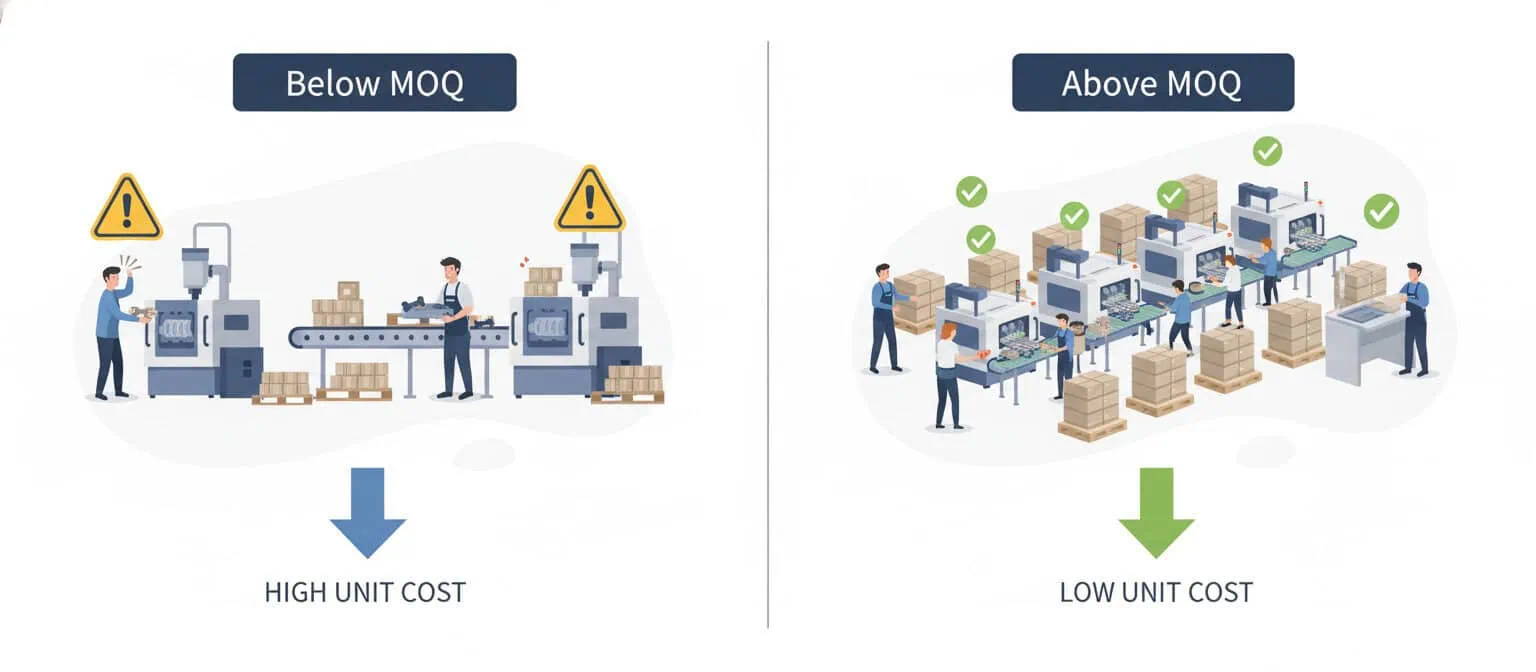
MOQ exists because production has physical limits:
Machines need setup time
Materials are purchased in bulk
Workers are assigned to production lines
Below a certain quantity, production becomes:
Inefficient
Unstable
More expensive per unit
That minimum stable quantity is what MOQ really means.
Why MOQ Has Nothing to Do with “How Serious” Your Order Is
We often hear this:
“Our order value is high. Why is MOQ still an issue?”
Because MOQ is not about order value.
It’s about how the product is made.
For example:
Injection-molded dog toys
Sewn pet beds
Stainless steel bowls
Each requires:
Different machines
Different setup time
Different material purchasing methods
That’s why MOQ is product-based, not order-based.
Why Factories Can’t Offer “One Universal MOQ”
If a factory tells you:
“Our MOQ is 500 pcs for everything”
You should be cautious.
That usually means:
They are reselling, not manufacturing
Or they are ignoring production reality
A real OEM manufacturer will always say:
“MOQ depends on the product and customization.”
And that’s the honest answer.
Now Let’s Talk About Pricing — Without Marketing Language
Why Asking for “Unit Price” Alone Is Dangerous
Another common situation:
“Just tell me the unit price first.”
The issue is — unit price without quantity is meaningless in OEM manufacturing.
Here’s why.
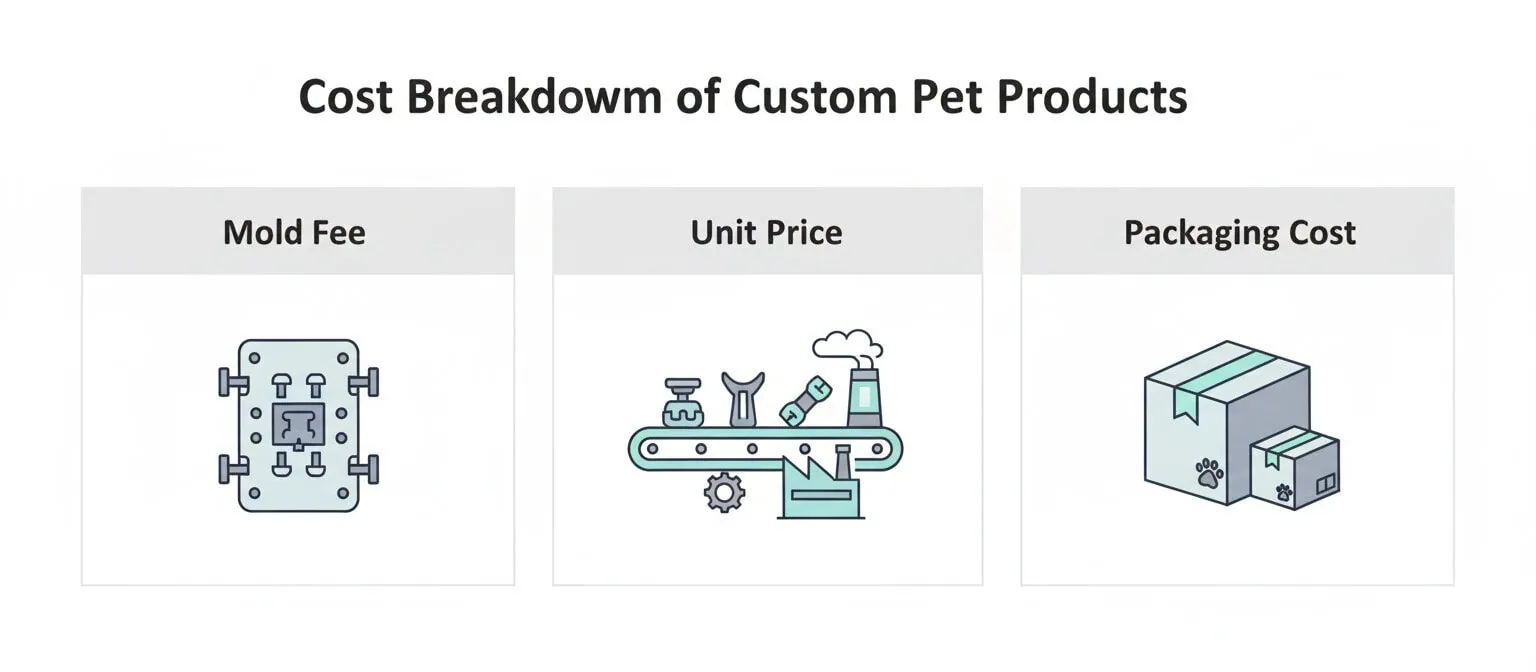
What Actually Makes Up the Price of a Pet Product
A pet product unit price usually includes:
Raw materials
Labor
Production overhead
Packaging
Quality control
Only one of these is truly fixed.
Everything else changes with:
Quantity
Customization
Packaging method
This is why pricing is always quoted in quantity tiers.
Why Larger Quantities Lower Unit Cost (It’s Not Greed)
Factories don’t lower prices because they “like big buyers more”.
Prices go down because:
Material cost per unit decreases
Setup cost is spread over more units
Production efficiency improves
This is physics and math — not negotiation tactics.
Customization: Small Changes, Real Cost Impact
From the buyer side, customization may feel “minor”:
A logo
A color change
A printed box
From the factory side, that often means:
New setup
Separate material batches
Additional QC steps
This is why customization always affects pricing, even if the product looks similar.
Lead Time: The Part Buyers Underestimate Most
Lead Time Is Not “Production Time”
This is one of the most common misunderstandings.
Buyers ask:
“How long is your production time?”
What they really need to know is:
How long until my goods are ready to ship?
These are not the same.
What Lead Time Actually Includes
A realistic lead time includes:
Sample confirmation (if required)
Tooling or setup (if needed)
Bulk production
Packaging
Final inspection
Skipping any of these steps usually creates problems later.

Why “Rush Orders” Often Cost More (or Fail)
When buyers ask for very short lead times, factories must:
Reschedule production
Run smaller batches
Increase overtime
This increases:
Cost
Risk of defects
Fast production is possible — but it must be planned early.
Seasonal Reality Most Buyers Ignore
Before major seasons (especially Q3–Q4):
Factory capacity tightens
Material lead times increase
Packaging suppliers get busy
If your product is seasonal, planning late is the biggest risk, not MOQ.
A Realistic Example (Based on Actual Orders)
Let’s look at a simplified but realistic case.
Buyer’s Situation
3 dog toy models
Custom logo
Retail packaging
Target market: EU
What Actually Happens
MOQ is checked per model, not total order
Price is calculated based on:
Quantity per SKU
Packaging type
Lead time includes:
Packaging approval
Production scheduling
When buyers understand this early:
Pricing discussions are faster
Lead times are more accurate
Orders move smoothly
How Smart Buyers Get Better Results (This Matters)
The buyers who get the best results usually do three simple things:
1. They Don’t Fixate on MOQ Alone
They look at:
Unit cost
Total landed cost
Long-term scalability
Sometimes a slightly higher MOQ actually means lower risk and lower cost per unit.
2. They Decide Packaging Early
Packaging decisions made early:
Shorten lead time
Reduce cost surprises
Packaging decisions made late:
Delay shipment
Increase cost
3. They Share Estimated Quantities Honestly
Even a range is enough.
This allows the factory to:
Recommend better options
Optimize cost
Avoid unrealistic promises

What a Good OEM Manufacturer Should Do for You
A real OEM partner should:
Explain limitations clearly
Suggest alternatives when needed
Help balance cost, MOQ, and lead time
If a supplier only says “yes” without explanation, problems usually appear later.
Final Words (From a Factory Perspective)
MOQ, pricing, and lead time are not barriers.
They are signals.
They tell you:
How a product is made
What scale is realistic
How to plan growth
Buyers who understand this:
Save time
Avoid costly mistakes
Build stable supply chains
If you are sourcing from a pet supplies manufacturer in China, the goal is not to find the lowest MOQ or fastest promise — but the most realistic plan that works in production.