Table of Contents
If you are already talking to factories about custom pet products, you’ve probably reached this moment:
You get the quotation.
You look at the numbers.
And you think:
“This is higher than I expected.”
“Where exactly is the cost coming from?”
“Is there any way to reduce it?”
This is exactly the point where good projects move forward — and bad ones get stuck.
Let me be very clear from the beginning:
Most custom pet product projects are not expensive because of the factory.
They are expensive because buyers don’t see the full cost picture early enough.
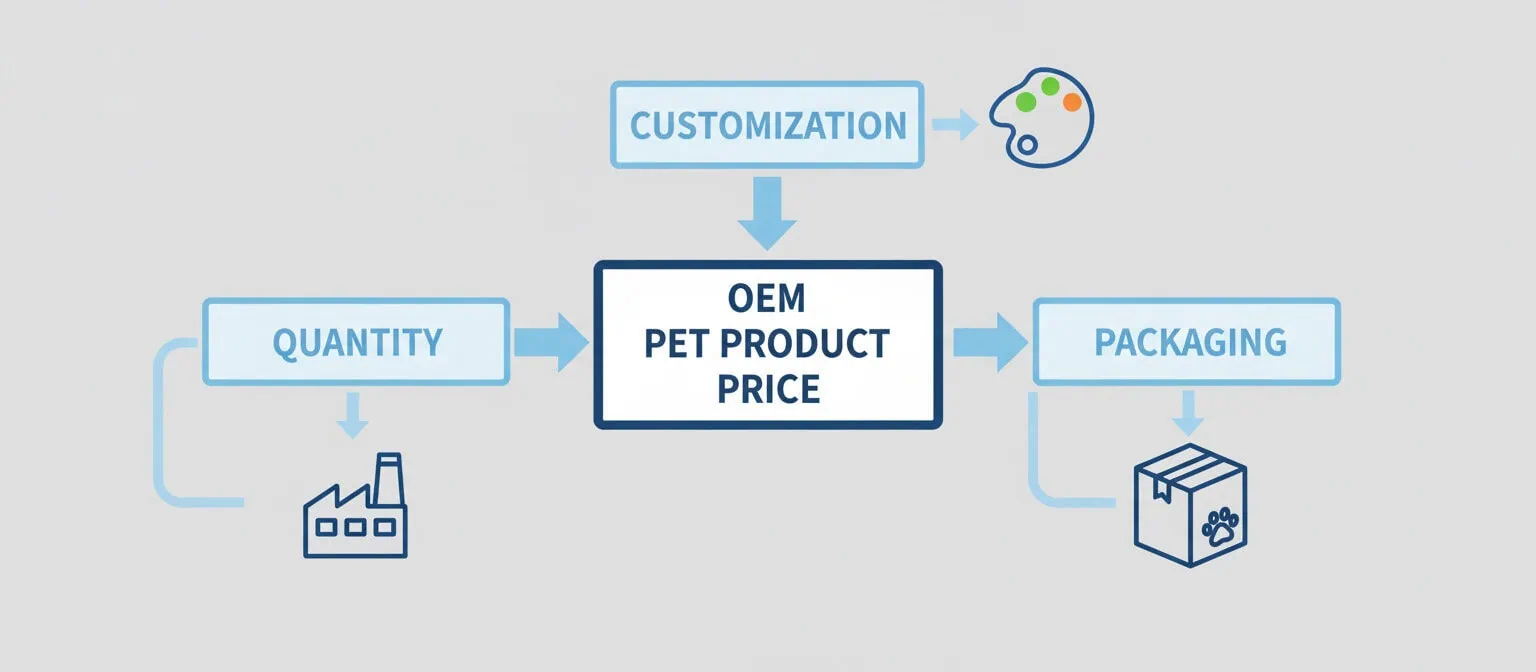
This article explains how we actually look at mold fees, unit price, and packaging cost from a factory side — and how experienced buyers use this knowledge to control cost without hurting the product.
First, a Reality Check About “Custom”
When buyers say “custom”, they often mean very different things.
From a factory point of view, these are completely different projects:
Same product, new color
Same product, logo added
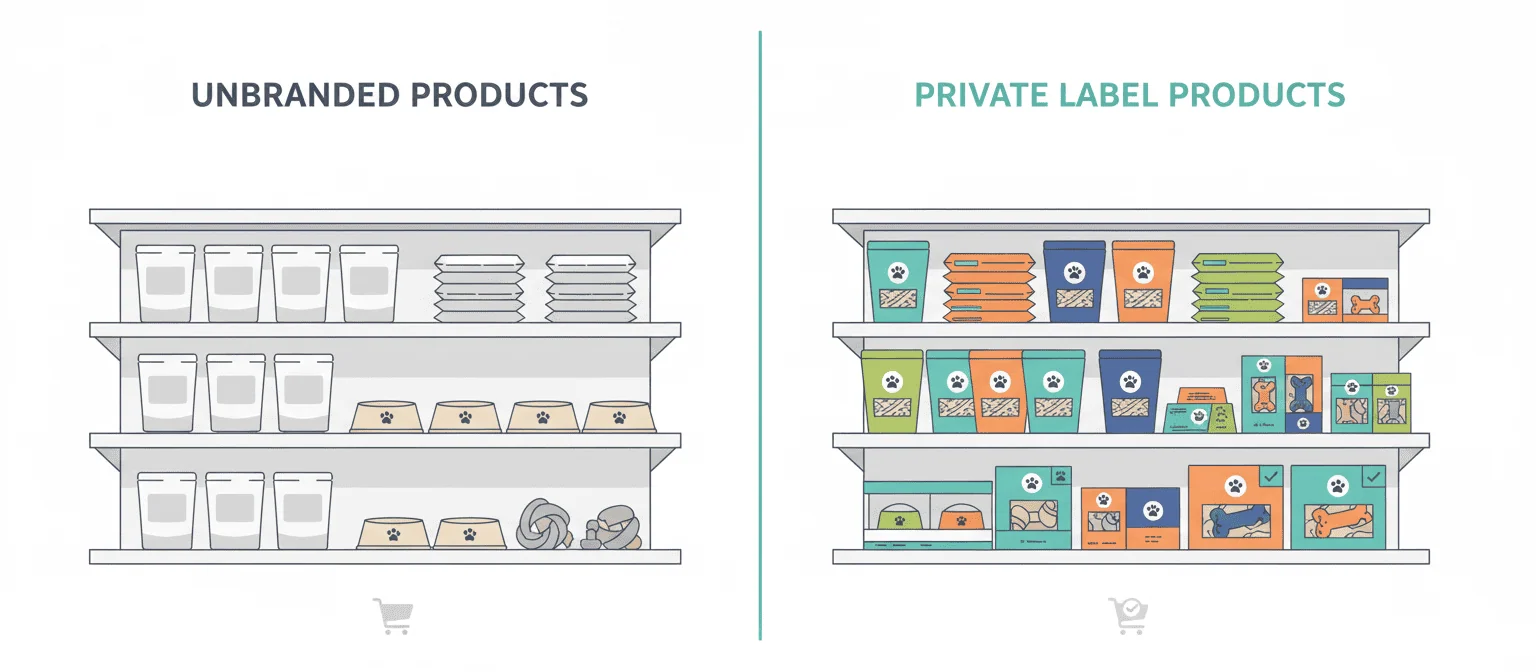
Same product, retail packaging
Slight structural adjustment
Fully new product design
The mistake many buyers make is assuming:
“Custom is custom — the cost difference shouldn’t be that big.”
In reality, each step up changes the cost structure.
If you understand where you are on this ladder, cost discussions become much easier.
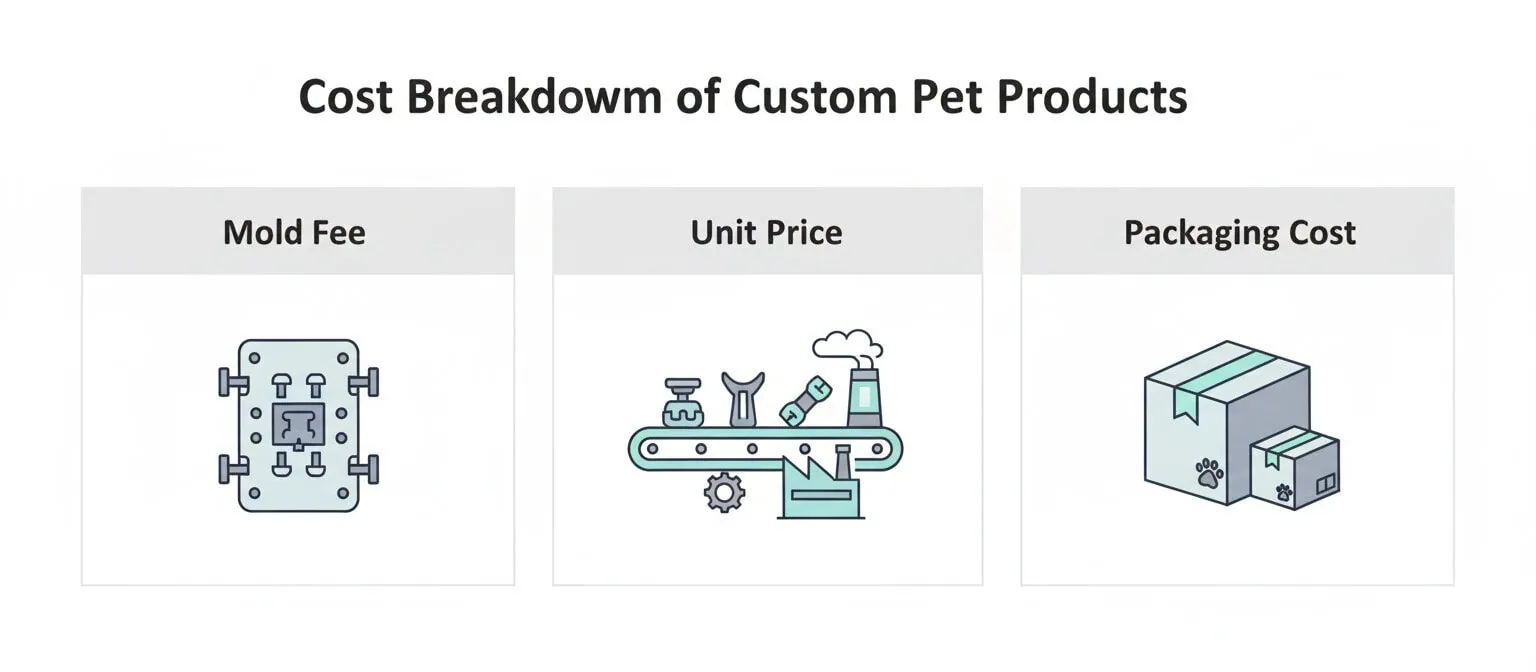
Mold Fees: Not a Trap — Just a Gate
Let’s talk about mold fees honestly, because this is where many projects slow down.
Why factories ask for a mold fee
A mold is not a “tool fee” we add for fun.
It’s a one-time investment that determines:
Whether the product can be produced consistently
Whether quality is stable at scale
Whether defect rate stays under control
For injection-molded pet products, the mold is the product.
When you really need to pay a mold fee
You usually need a mold fee when:
The product shape is new
The structure is changed
Existing molds don’t match your design
You usually don’t need it when:
Using an existing mold
Only changing color
Adding logo printing
This is why two suppliers may quote:
One with a mold fee
One without
And both may still be “correct” — they’re just offering different levels of exclusivity.
A sales truth many factories won’t say
If you want:
Your own design
Long-term differentiation
Price protection
Then a mold fee is often worth paying.
If you are:
Testing the market
Launching your first SKU
Controlling cash flow
Then starting with an existing mold is usually smarter.
There is no “right” answer — only a right strategy.
Unit Price: The Number Everyone Wants, but No One Should Ask First
Here is something we explain to customers almost every day:
Unit price is not a starting point.
It’s a result of decisions you’ve already made.
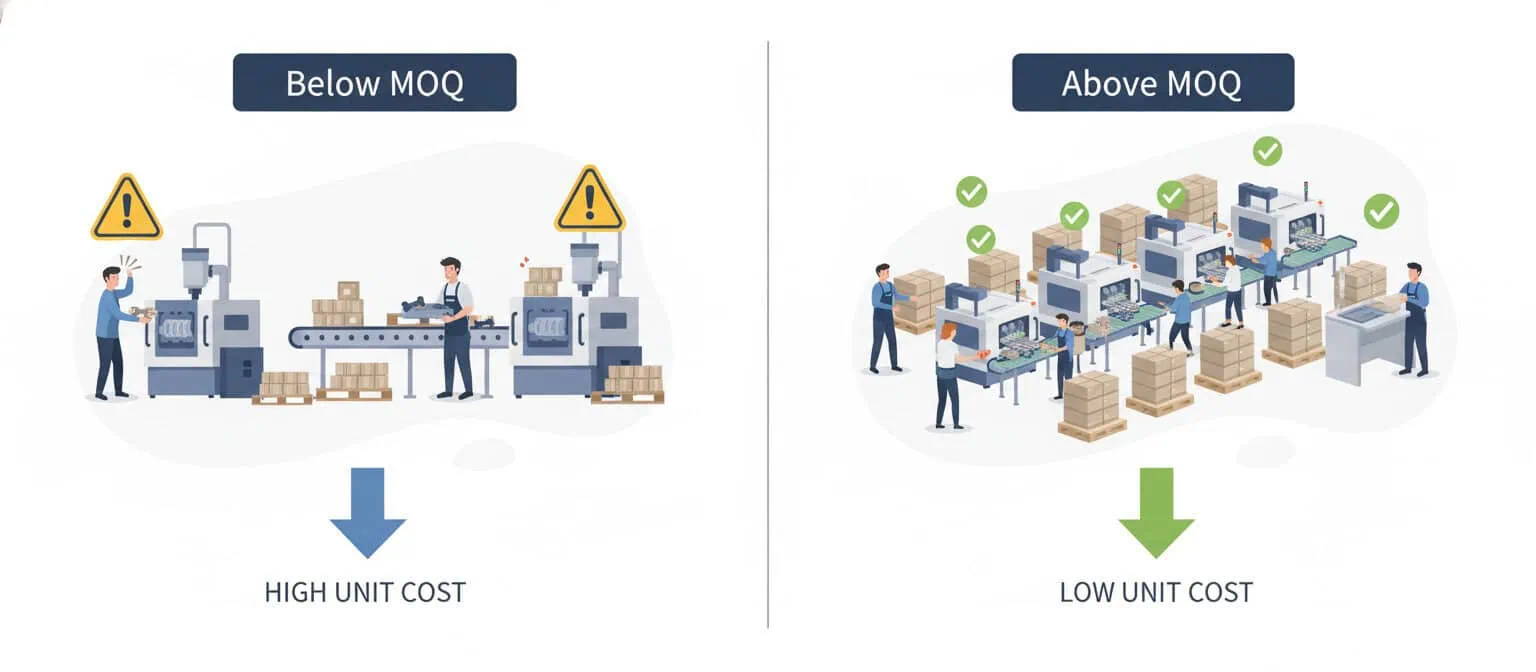
Quantity decides more than you think
From a factory perspective:
Setup time is fixed
Labor preparation is fixed
Machines don’t care if you run 500 pcs or 5,000 pcs
That’s why:
Small quantity = higher unit cost
Larger quantity = lower unit cost
This is also why we always ask:
“What quantity are you planning?”
Not to push you — but because pricing without quantity is guessing.
Materials: cheap on paper, expensive in reality
We’ve seen many cases where buyers choose:
Slightly cheaper material
Lower grade option
And later face:
Product complaints
Returns
Brand damage
Good buyers don’t ask:
“What’s the cheapest material?”
They ask:
“What material makes sense for this market and price point?”
That question saves money long-term.
Packaging: Where Cost Quietly Explodes (or Shrinks)
If there is one area where factories can really help buyers, it’s packaging.
Packaging affects more than unit cost


Packaging impacts:
Manual packing time
Carton size
Container loading
Shipping cost per unit
A beautiful retail box may cost:
+$0.10 in packaging
+$0.30 in shipping
Is it wrong? Not necessarily.
But it must be intentional.
The hidden MOQ of packaging
Many buyers are surprised to hear:
“The product MOQ is OK, but the packaging MOQ is higher.”
This is normal.
Printing factories also have:
Minimum runs
Setup costs
Ignoring this early often causes last-minute changes — and delays.
How Experienced Buyers Keep Costs Under Control
From real projects, the buyers who succeed usually:
Start with existing molds
Keep first packaging simple
Launch, test, then upgrade
Increase MOQ step by step
Very few successful pet brands started with:
“Fully custom everything from day one.”
They earned that stage.

What a Good OEM Partner Actually Does
A good pet supplies manufacturer in China should not just send a number.
They should:
Explain what drives the cost
Show where you can save
Warn you where saving is risky
Help you choose, not push you
If a factory only says:
“This is the price, take it or leave it”
They are not thinking long-term.
Final Words (From the Sales Desk)
Here’s the honest truth:
Most buyers don’t lose money because the price is high.
They lose money because they optimize the wrong part of the cost.
Once you understand:
When mold fees make sense
How unit price really works
Why packaging decisions matter
Cost stops being a problem — and starts becoming a planning tool.
If you’re already discussing a custom project and want practical advice, not sales pressure, that’s exactly where we help.