Introduction
When importing pet supplies from China, many buyers ask for “DDP shipping” or “door-to-door service.”
In practice, these terms are often used interchangeably—but they are not the same thing.
As a pet supplies manufacturer working with importers worldwide, we see confusion around this topic every week.
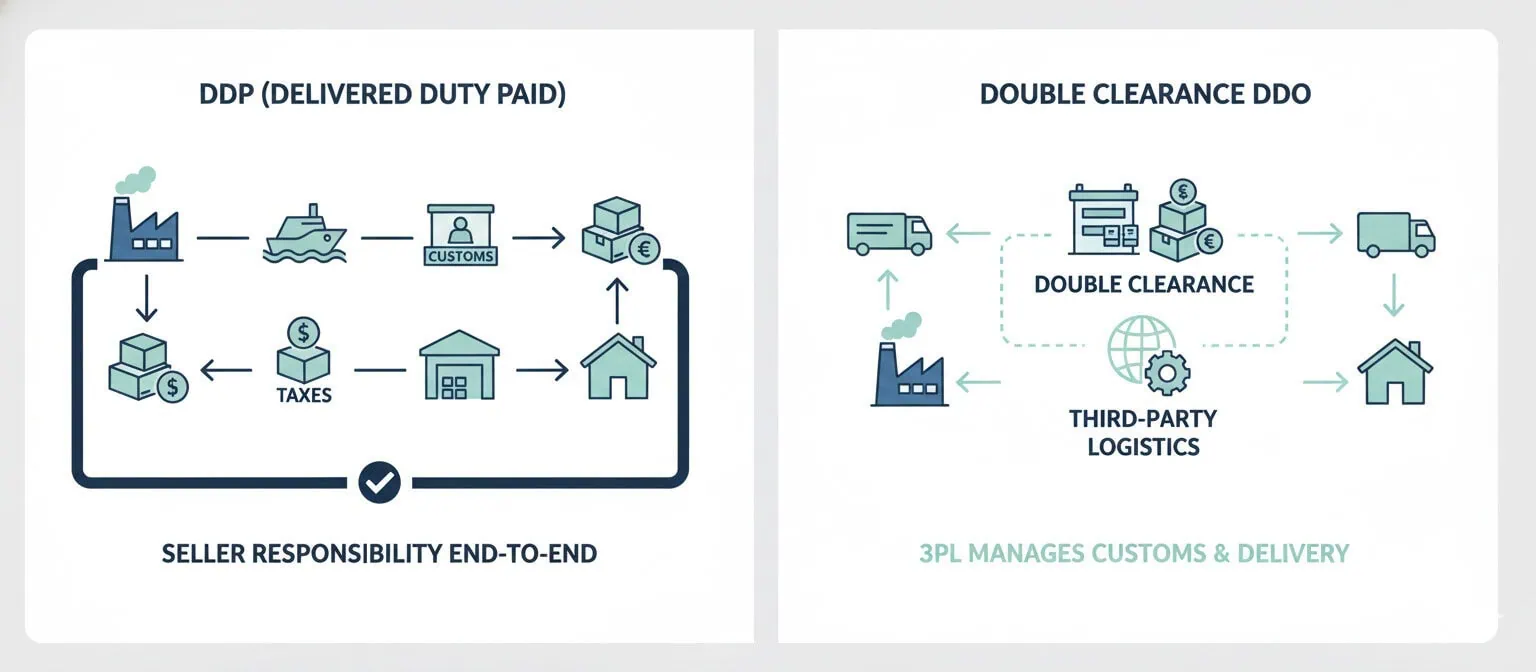
This article explains:
What DDP really means under Incoterms
What “double clearance door-to-door” actually means in real operations
The key differences, risks, and limitations buyers should understand
If you are importing pet products from China, this clarity can help you avoid compliance risks and unexpected costs.
What DDP Shipping Really Means (Incoterms Definition)
Under Incoterms, DDP (Delivered Duty Paid) means:
The seller is responsible for all costs and risks until the goods are delivered to the buyer’s specified address, including import duties and taxes.
In theory, this sounds simple.
In reality, true DDP requires the seller to:
Act as the importer of record
Handle import customs clearance under their own or registered entity
Pay import duties and VAT legally in the destination country
For Chinese manufacturers, this is rarely practical because:
We usually do not have tax registration in the buyer’s country
Import compliance varies significantly by country
Tax liability and audit risks are high
Strict DDP is more common between domestic or regional suppliers, not cross-border OEM manufacturing.
What “Double Clearance Door-to-Door” Means in Practice
In the pet supplies industry, when buyers say “DDP,” they often actually mean:
Double clearance door-to-door shipping
This is not an Incoterms rule, but a logistics service arrangement.
Typically, it includes:
Export customs clearance in China
International transportation
Import customs clearance via a local agent or forwarder
Final delivery to the buyer’s warehouse
Import duties and taxes are usually:
Pre-calculated
Included in the shipping cost
Handled by the logistics provider, not the manufacturer directly
This model is widely used for:
Small to medium importers
First-time buyers
Mixed SKU shipments

Key Differences: DDP vs Double Clearance
Legal Responsibility
DDP (strict): Seller is legally responsible as importer
Double clearance: Import is handled by a third-party agent
Tax Transparency
DDP: Taxes are clearly declared and traceable
Double clearance: Taxes are often bundled, sometimes estimated
Compliance Risk
DDP: High responsibility, high compliance requirements
Double clearance: Lower operational burden for buyers, but less transparency
Suitability
DDP: Large companies with legal structure in destination country
Double clearance: SMEs, new importers, test orders
When Double Clearance Makes Sense for Pet Supplies
Based on real shipments, double clearance is commonly used when:
Order volume is small or medium
Buyer does not have import experience
Buyer wants predictable landed cost
Products are standard and compliant
For many pet supplies buyers, it provides:
Simplicity
Fewer documents to manage
Faster decision-making
Important Limitations Buyers Must Understand
This is where experienced factories need to be honest.
Double clearance is not suitable for every situation.
Potential limitations include:
Limited control over declared customs value
Not ideal for companies needing VAT reclaim
Less flexibility for branded or sensitive products
Country-specific restrictions
This is why we always evaluate:
Product category
Destination country
Buyer’s business model
before recommending this option.
How We Normally Advise Buyers
As an OEM pet supplies manufacturer, we do not push one shipping method for all customers.
Our typical approach:
Explain all available options clearly
Highlight risks and limitations
Recommend based on order size and buyer experience
For many first-time importers, double clearance door-to-door is a practical starting point.
For established brands, FOB or CIF with their own forwarder is often more suitable.

Final Thoughts
DDP and double clearance are often mixed up—but they should not be.
Understanding the difference between trade terms and logistics solutions helps buyers:
Avoid compliance issues
Choose the right shipping model
Plan long-term sourcing strategies
If you are importing pet supplies from China and are unsure which option fits your situation, discussing this early can save time and cost.