Table of Contents
The global pet industry is expanding faster than ever, creating new opportunities for brands, distributors, importers, and e-commerce sellers. As competition increases, more companies are turning to OEM (Original Equipment Manufacturer) pet supplies manufacturing to build private-label product lines, reduce costs, expand assortment, and strengthen brand presence.
This comprehensive guide explains everything you need to know about OEM pet supplies manufacturing, how the process works, why global buyers choose China, and how OEM helps build a scalable and profitable pet brand.
1. What Is OEM Pet Supplies Manufacturing?
OEM (Original Equipment Manufacturer) pet supplies manufacturing refers to a business model where a factory produces pet products according to the buyer’s brand, specifications, design, and packaging requirements, while the final product is sold under the buyer’s own brand name.
In simple terms:
The factory manufactures the product
The buyer owns the brand
The finished goods carry the customer’s label and packaging
OEM manufacturing is widely used in industries such as electronics, household goods, textiles, cosmetics, and especially pet supplies, where product variety and customization demand are high.
2. What Types of Pet Products Can Be OEM Manufactured?
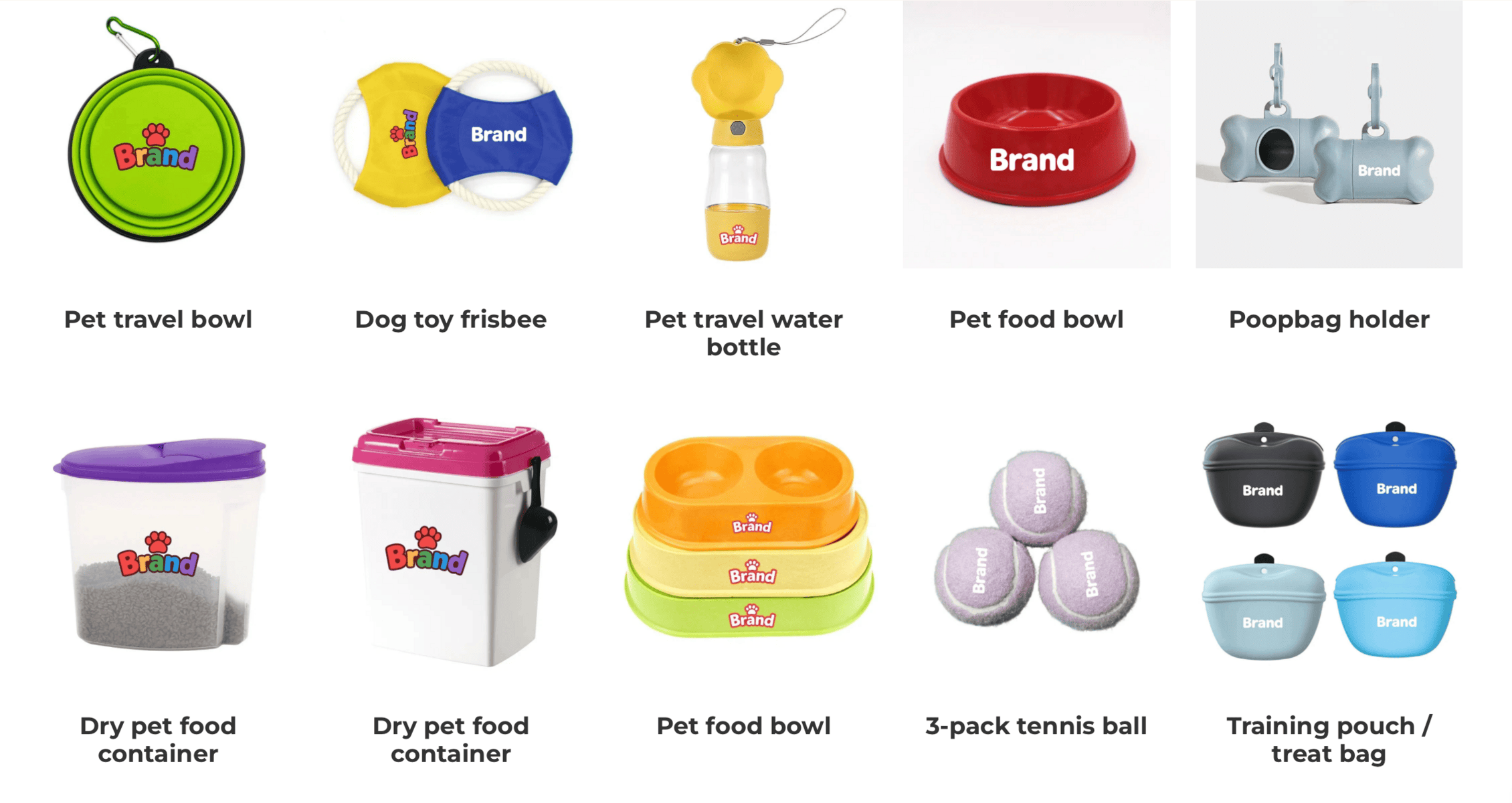
OEM manufacturing is extremely flexible, covering nearly every major pet product category. Some of the most commonly customized products include:
1. Dog Toys
TPR toys
Rubber toys
Rope toys
Plush toys
Squeaky toys
Chew toys
Interactive toys
2. Cat Toys
Feather toys
Cat teaser wands
Plush mice
Catnip toys
Spring toys
Ball toys
3. Collars, Harnesses, and Leashes
Nylon harnesses
Adjustable collars
Training leashes
Reflective walking gear
Set combinations
4. Pet Feeding Products
Plastic bowls
Stainless steel bowls
Silicone feeding mats
Foldable travel bowls
5. Pet Hygiene Products
Dog training pads
Pet wipes
Deodorizing sprays
Grooming brushes and tools
6. Cat Litter
Tofu litter
Bentonite litter
Mixed or functional litter formulations
7. Pet Food and Treats
Dry dog food
Wet cat food
Dog biscuits
Jerky pet treats
Freeze-dried snacks
Because OEM covers such a wide range of categories, global retailers and online sellers can build large private label assortments without owning a factory.
3. How Does the OEM Manufacturing Process Work?
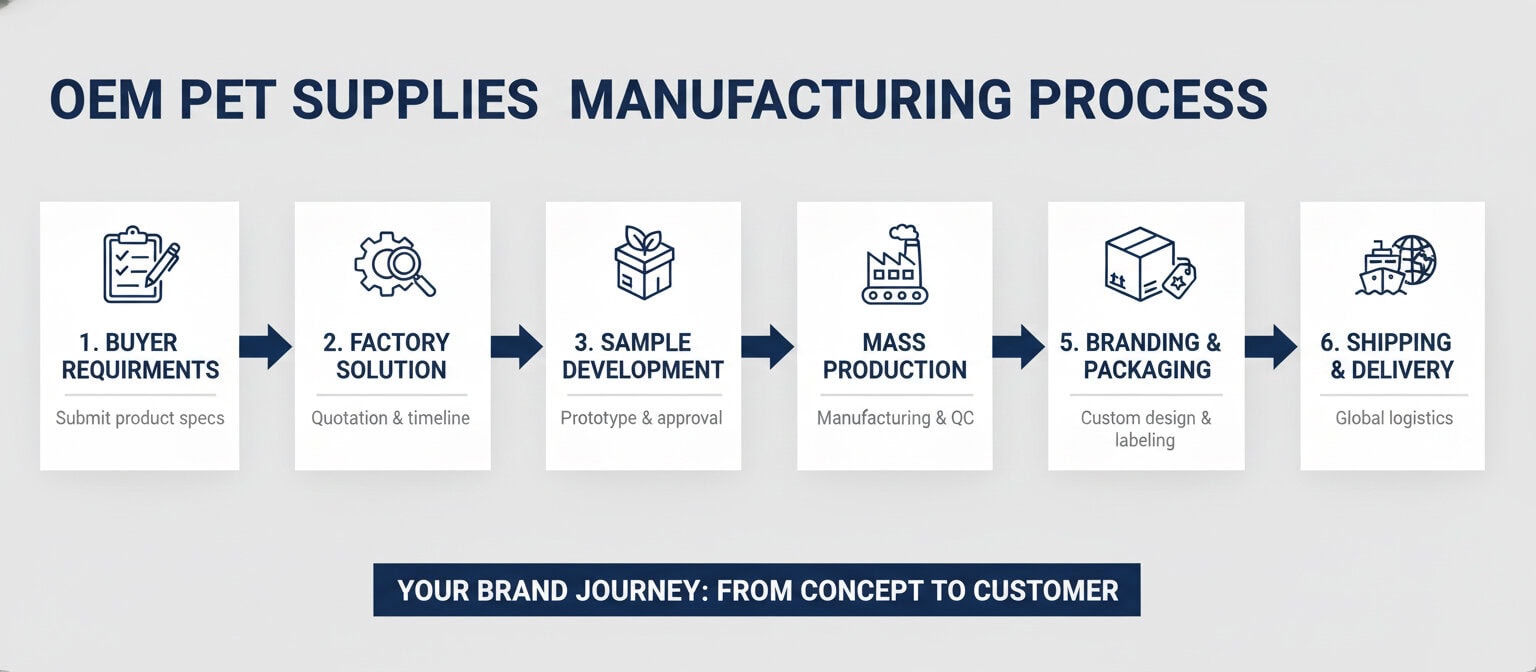
The OEM process is structured, predictable, and designed to support scalable production. A standard OEM project follows these steps:
Step 1: Buyer Provides Requirements
The buyer submits:
Product category
Material choice
Size and specifications
Target pricing
Custom colors
Packaging requirements
Branding details (logos, barcodes, design style)
Step 2: Factory Provides a Manufacturing Solution
A professional OEM manufacturer offers:
Material recommendations
Engineering suggestions
Packaging options
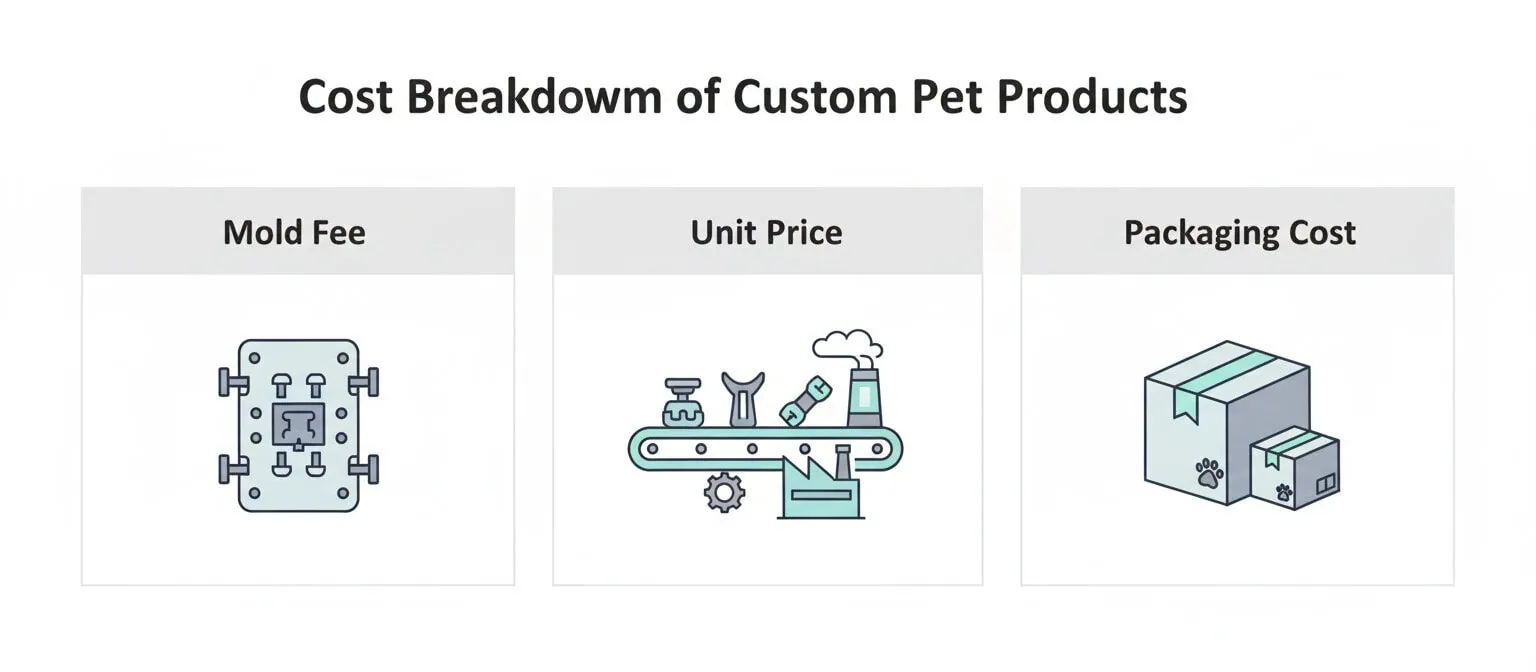
Pricing breakdown
Production timeline
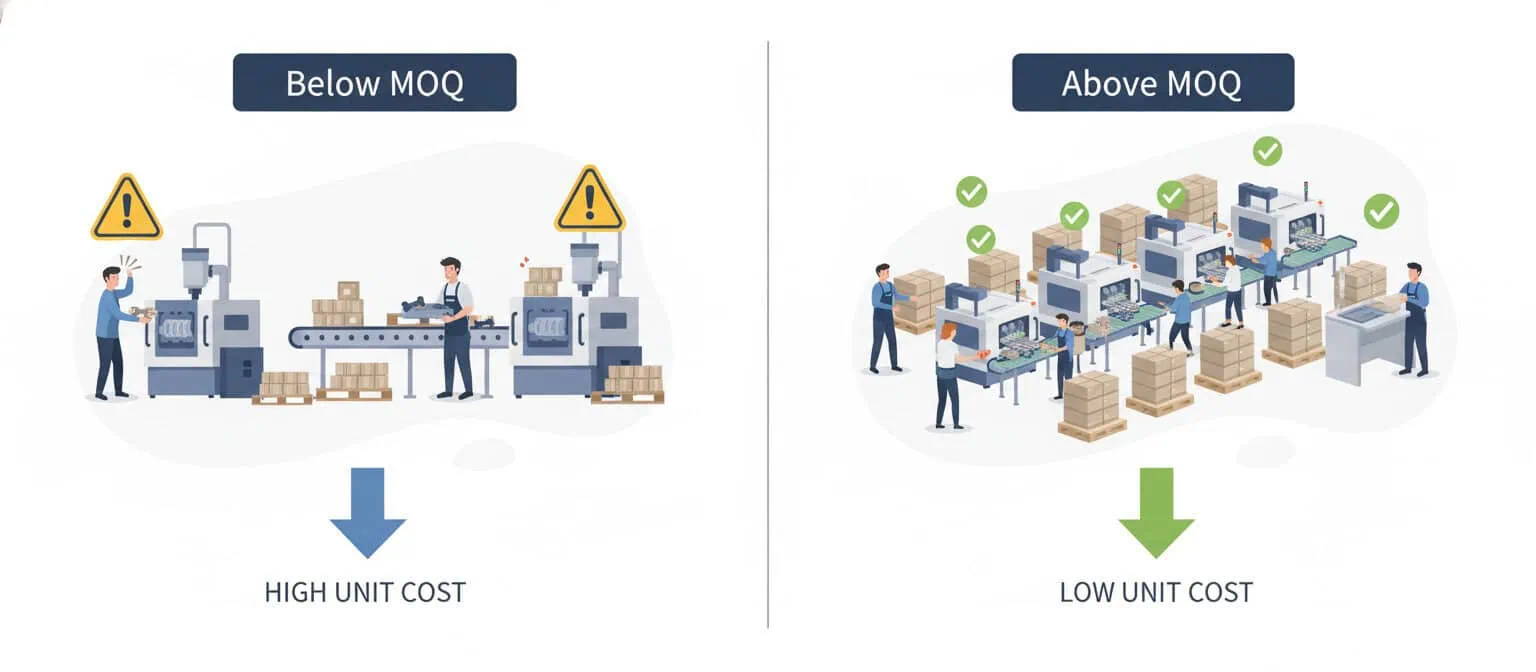
MOQ (Minimum Order Quantity) requirements
This step ensures the project is feasible and aligned with market needs.
Step 3: Sample Development
The factory creates:
Product prototype
Material samples
Packaging samples
Color variations
The buyer checks:
Quality
Functionality
Appearance
Branding accuracy
Only after sample approval does mass production begin.
Step 4: Mass Production
This stage includes:
Raw material sourcing
Large-scale manufacturing
Injection molding (for TPR or plastic toys)
Stitching and sewing (for textile products)
Automated production (for pads, wipes, litter)
Quality control checks
Packaging and labeling
OEM factories maintain strict QC procedures to ensure consistency.
Step 5: Branding & Packaging
The factory applies the customer’s brand identity:
Logo printing
Hangtags
Header cards
OPP bags
Retail gift boxes
UPC/EAN barcode stickers
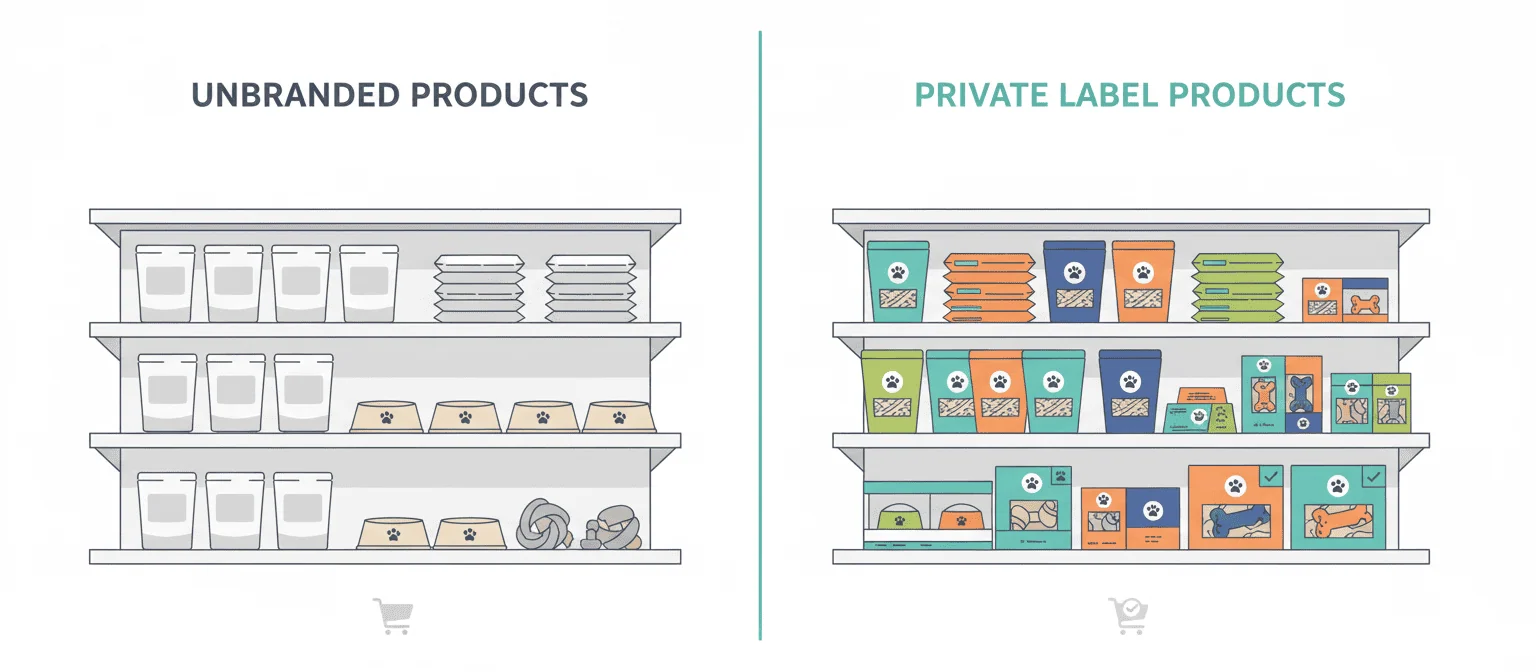
This is where a product transforms from a generic item into a complete private-label brand asset.
Step 6: Shipping & Logistics
The factory prepares:
Export cartons
Palletization
Customs documentation
The buyer may choose:
FOB shipping from Chinese ports
CIF
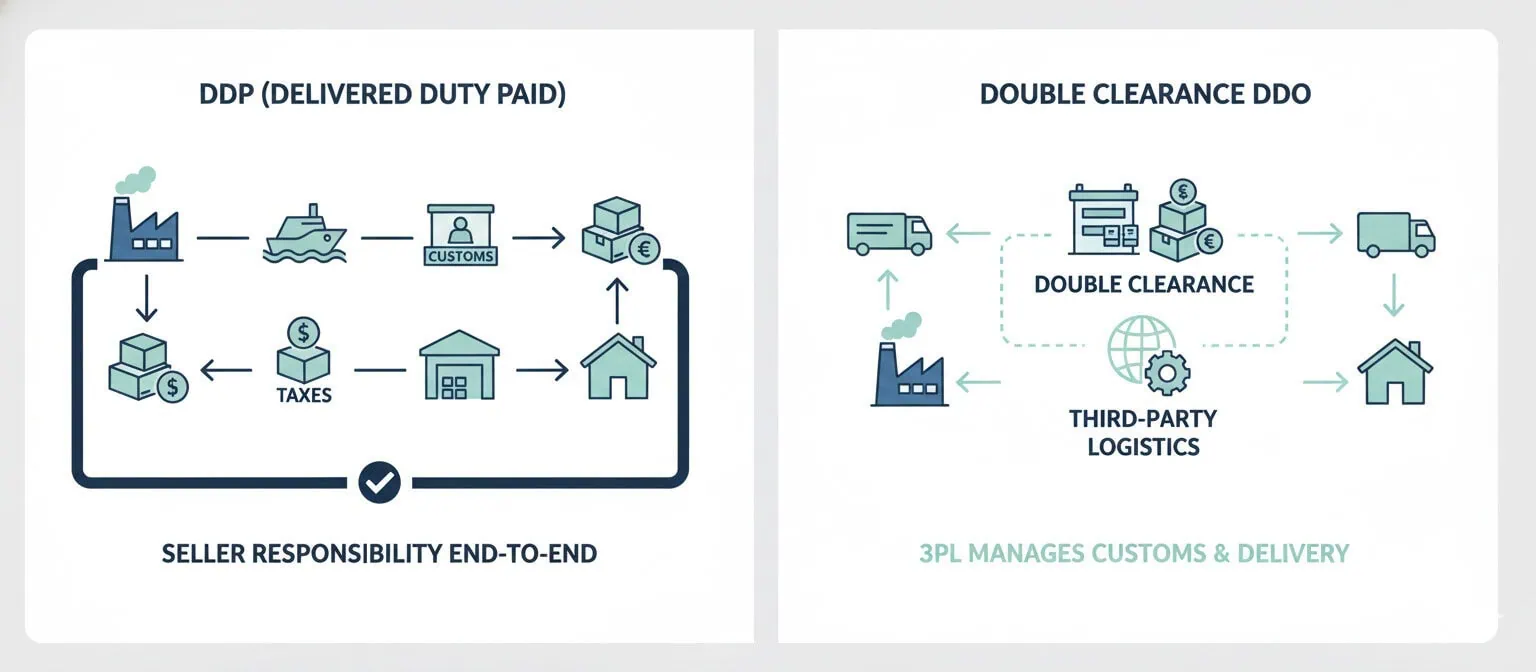
DDP delivery to destination warehouses
4. OEM vs. ODM: What’s the Difference?
Many buyers confuse OEM with ODM. Here’s the difference:
Feature OEM ODM
Who designs the product? Buyer Factory
Who owns the brand? Buyer Buyer
Customization level Medium–High Medium
Speed to launch Fast Very fast
Ideal for Private label brands Buyers who want ready-made products
OEM = your idea + factory production
ODM = factory idea + your brand
Most global brands use both models depending on the project.
5. Why Do Global Pet Brands Choose China for OEM Manufacturing?
China is the global center of pet product manufacturing due to several advantages:
1. Strong Industrial Clusters
Different regions specialize in different products:
Taizhou: TPR toys, plastic injection molding
Dongguan / Guangzhou: textile pet products
Shandong / Shanghai: pet food & treats
Qingdao / Hebei: cat litter and hygiene products
These clusters ensure efficiency, stable quality, and economies of scale.
2. Mature OEM/ODM Capabilities
Chinese factories offer:
Fast sampling
Advanced engineering
Strong mold development capacity
Competitive pricing
Full packaging customization
3. International Certifications
Most top factories hold:
ISO quality systems
BSCI / Sedex audits
FDA / HACCP (for food)
CE / EN71 / ASTM
REACH / RoHS compliance
4. Competitive Pricing
China’s supply chain scale allows for:
Lower material cost
Efficient labor structure
Large-volume production
Making Chinese OEM ideal for private-label brands.
5. Wide Product Range
Buyers can source all categories from a single ecosystem.
6. Benefits of OEM Pet Supplies Manufacturing
OEM offers unparalleled advantages:
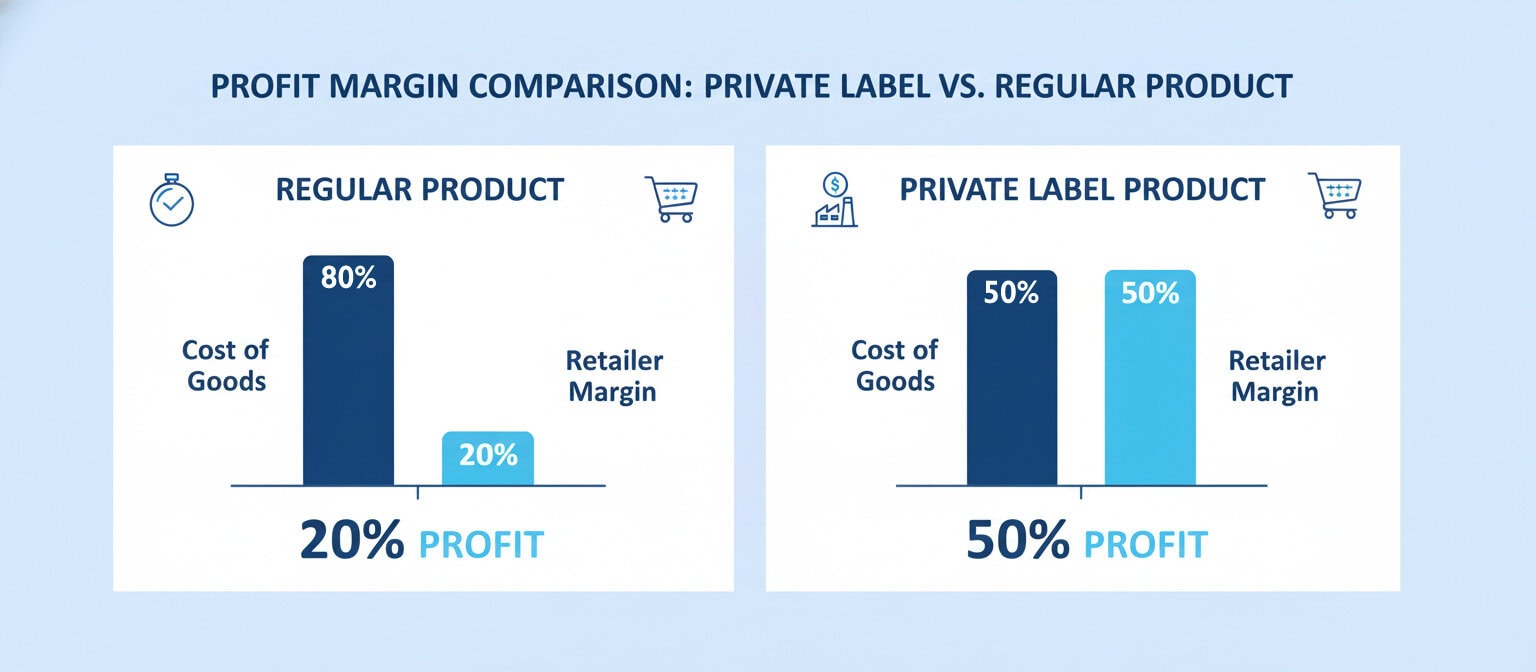
1. Higher Profit Margins
Custom products avoid price wars and allow premium pricing.
2. Strong Brand Identity
You build brand loyalty instead of promoting someone else’s brand.
3. Product Exclusivity
Competitors cannot sell the same product with the same packaging.
4. Market Adaptation
Products can be customized for:
Size
Color
Packaging language
Cultural preferences
5. Stable Supply Chain
The factory produces exclusively for your brand, reducing stock-out risks.
6. Better Marketing Performance
Custom packaging performs better on:
Amazon listings
Retail shelves
Social media
Influencer campaigns
7. Faster Expansion
Easily scale from 10 → 100 → 300 SKUs.
7. Example: How a Professional OEM Factory Like Petfond Works
Petfond, based in Taizhou, specializes in:
TPR dog toys
Injection-molded pet products
Silicone items
Grooming accessories
Seasonal gift sets
Complete private-label packaging solutions
Why international brands choose Petfond:
Strong material expertise
Fast sample turnaround
Low and flexible MOQ
Professional design support
Strict quality control
Export experience to 30+ countries
Petfond represents the new generation of OEM factories—professional, flexible, and brand-oriented.
8. How to Choose a Reliable OEM Pet Product Manufacturer
Look for:
Certification readiness
Strong communication
Sample quality
Transparent pricing
Reasonable MOQs
Factory photos/videos
Experience with foreign brands
9. Conclusion: OEM Manufacturing Is the Future of Pet Brands
OEM pet supplies manufacturing enables:
Higher profits
Stable supply
Fast category expansion
Stronger branding
Global competitiveness
Whether you’re an importer, retailer, or pet brand, OEM manufacturing is one of the most effective strategies to build a sustainable long-term business.