Table of Contents
Let me be very honest with you.
If you are looking for a fixed price list, you are probably still thinking in a trading company or distributor mindset.
And that’s not wrong.
It’s just not how OEM pet supplies manufacturing actually works.
Almost every week, we receive emails like these:
“Can you send me your price list?”
“What is your MOQ?”
“I just need a rough price to compare.”
These questions are completely reasonable.
But when you work directly with a pet supplies factory in China, a fixed price list usually creates more confusion, not clarity.
Let me explain why — the same way we explain it to our real customers.
First, let’s be clear: we are not avoiding prices
Some buyers assume that when a factory says “we don’t have a price list”, it means:
the supplier is hiding something
prices are unstable
negotiation will be difficult
In reality, it’s the opposite.
Factories that work seriously with OEM buyers cannot give one price without knowing the order details, because that price would be meaningless.
Not higher.
Not lower.
Just meaningless.
Why “one price” does not exist in pet supplies manufacturing
When buyers ask for a price list, what they usually imagine is something like this:
Product A – $X
Product B – $Y
MOQ – same for everything
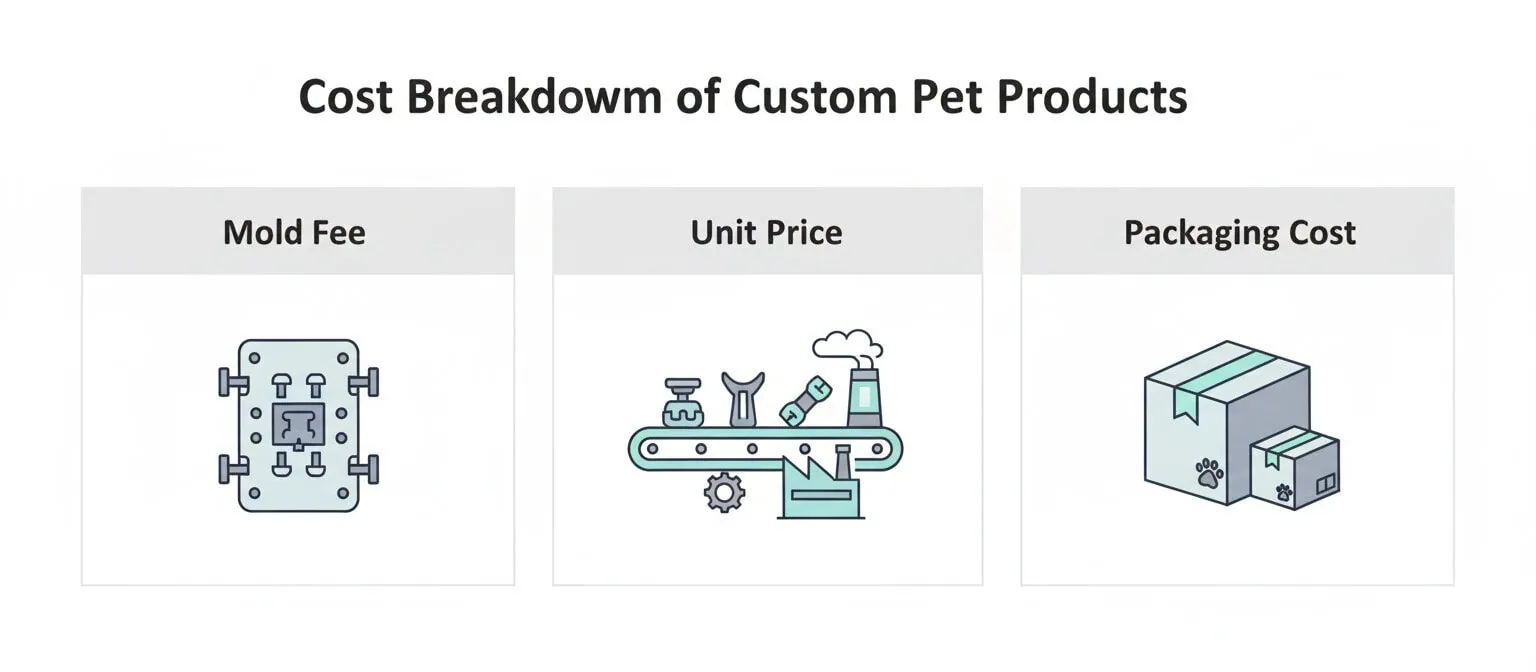
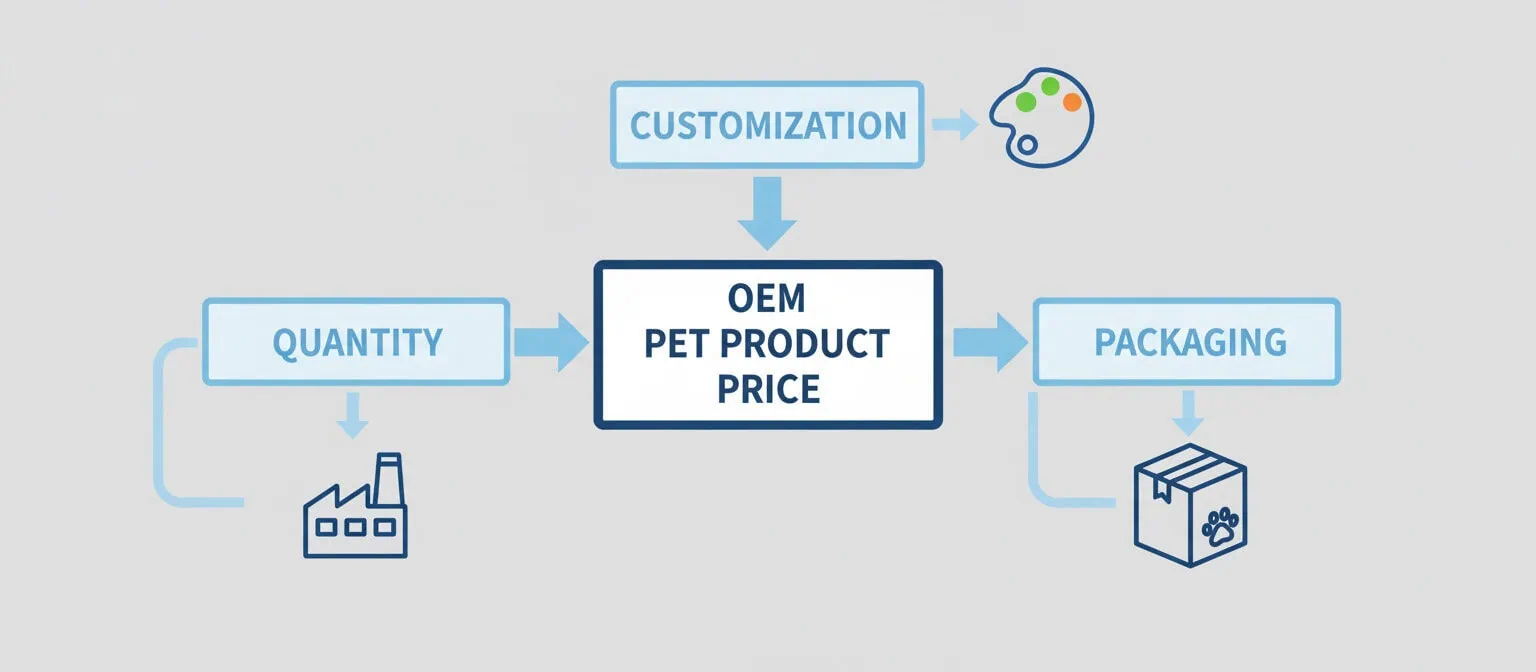
But in real manufacturing, three things always change the price, even for the same product.
1. Quantity
2. Customization
3. Packaging
If any one of these changes, the price changes.
That’s not a sales rule.
That’s a production reality.
Let’s talk about MOQ — because this is where most misunderstandings start
When buyers ask about MOQ, what they usually mean is:
“What is the smallest order you are willing to accept?”
But for factories, MOQ is not a sales decision.
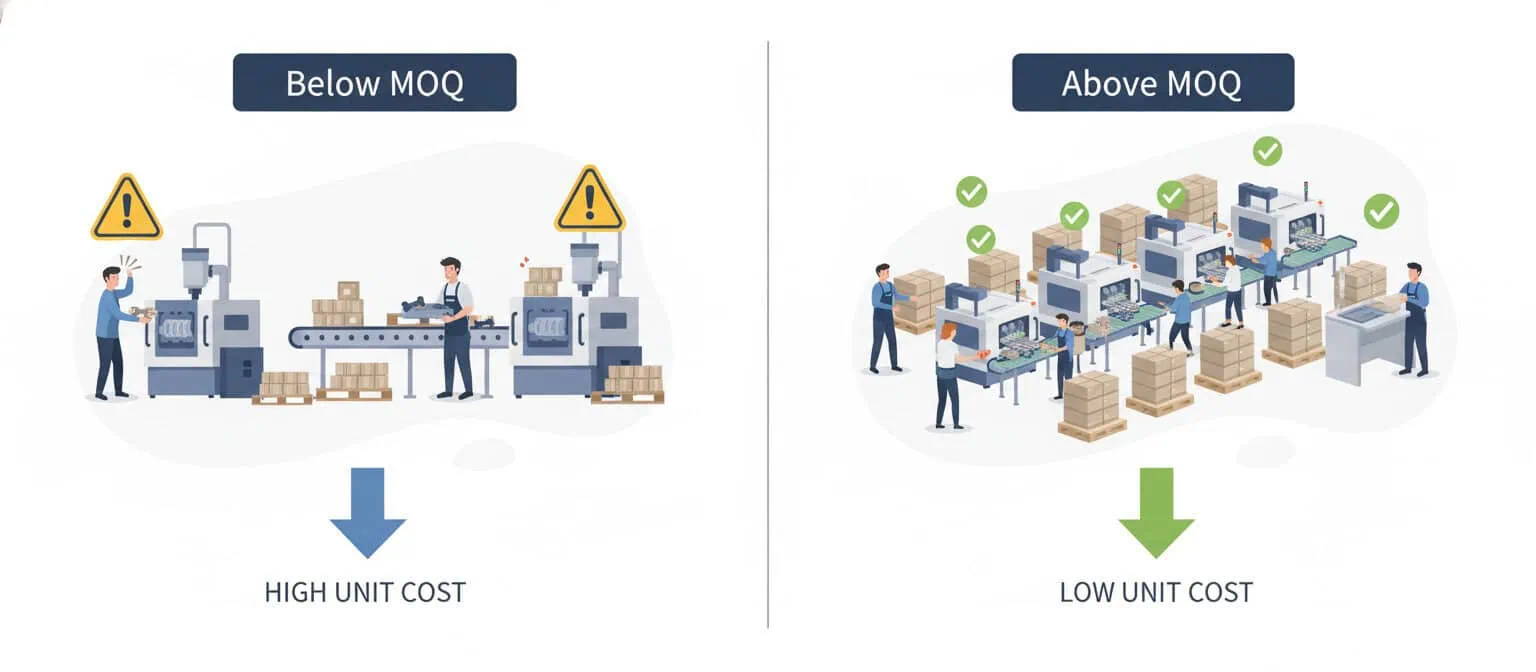
MOQ is the minimum level where production becomes stable.
A silicone lick mat, a TPR dog toy, and a stainless steel pet bowl are all “pet products”, but:
they use different materials
different machines
different workers
different production rhythms
So naturally, they have different MOQs.
This is why asking for “one MOQ number for all products” never works with OEM factories.
Why price always depends on quantity (even for the same product)
Let’s use a very simple example.
Imagine the same dog toy:
same mold
same material
same packaging
If you order:
500 pcs
5,000 pcs
Do you expect the unit price to be the same?
Of course not.
At lower quantities:
raw materials are bought in smaller volumes
machine setup cost is spread over fewer units
labor efficiency is lower
At higher quantities:
material cost goes down
production becomes smoother
waste rate is lower
This is why quantity is always the first thing a factory needs before quoting.
Customization changes more than buyers expect
Many buyers say:
“It’s the same product, just add my logo.”
From a marketing perspective, that sounds small.
From a factory perspective, that may involve:
new printing setup
color matching
packaging redesign
additional quality checks
Sometimes customization has a very small cost impact.
Sometimes it changes the entire production plan.
Without knowing your customization level, any price would just be a guess.

Packaging is part of the cost — not an afterthought
This is another area where price lists fail completely.
Packaging affects:
unit cost
MOQ
carton size
shipping cost
For example:
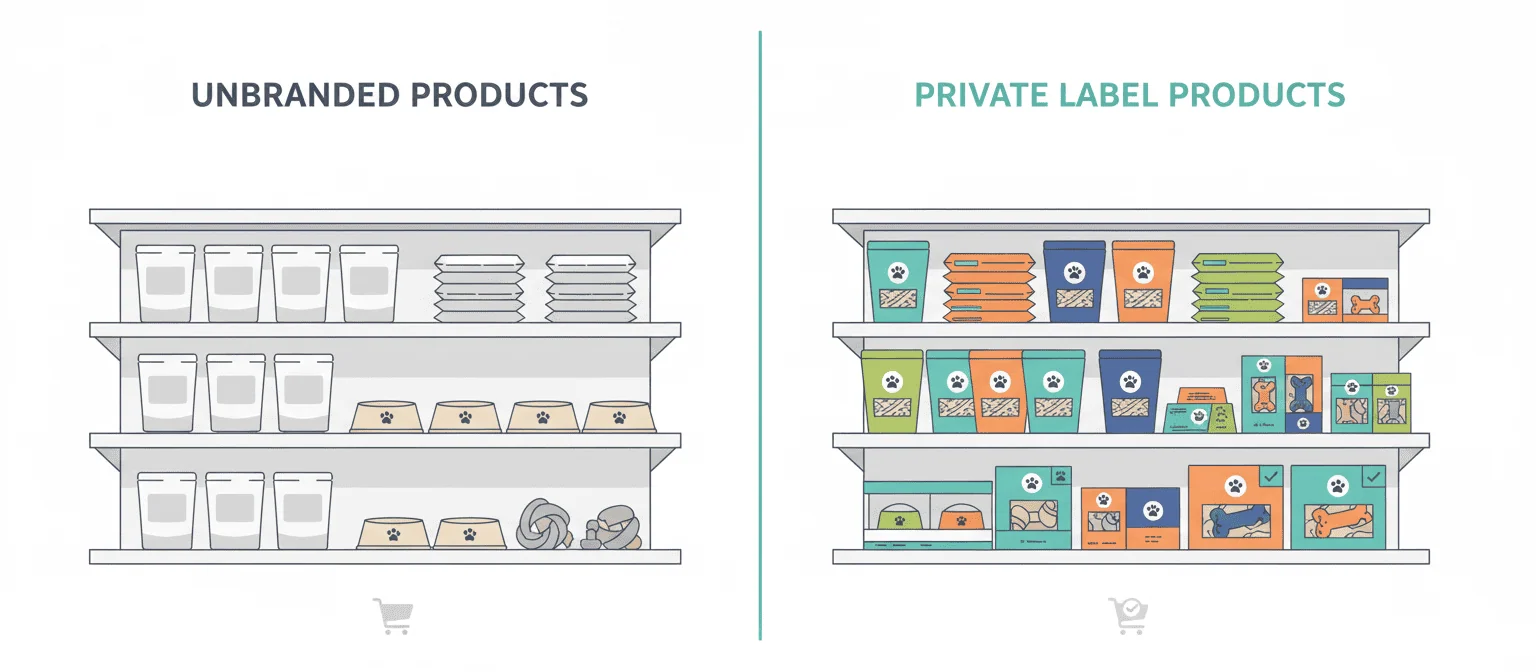
bulk OPP bag vs retail color box
simple label vs full branding
single SKU carton vs mixed SKUs
Two buyers ordering the same product but with different packaging will never receive the same quotation.
So how does a real quotation actually work?
Here is what we normally do with serious buyers.
We start with context.
We need to know:
Which products you are interested in
Whether you want customization
Rough quantity per item
Your target market (EU / USA / others)
With this information, we can:
confirm realistic MOQ
calculate executable pricing
suggest better options if needed
This is how you get a price you can actually use.

Why this approach is better for buyers (even if it feels slower)
A fixed price list feels fast.
A proper quotation saves time later.
Because:
prices match your real order
MOQs are realistic
production issues are discovered early
Most failed sourcing projects don’t fail because of price.
They fail because assumptions were wrong.
A very common mistake buyers make
Some buyers collect 10 “price lists”, compare numbers, and choose the lowest one.
Later, they find out:
MOQ cannot be met
packaging is different
quality level is not the same
delivery time was unrealistic
At that point, the cheapest price is no longer cheap.
What we actually do as an OEM pet supplies manufacturer
Our job is not just to quote.
Our job is to help buyers:
understand production limits
control cost realistically
avoid sourcing mistakes
build products that can actually ship
This is why we don’t send price lists.
We send solutions that work in real production.
If you want a price that makes sense, here’s what to do
If you are serious about sourcing pet products from China, the fastest way forward is simple:
Select the products you like
Tell us what level of customization you need
Share your estimated quantity
We will then tell you:
what the MOQ really is
what the price really means
whether the project is realistic
No guessing.
No generic numbers.
Just a quotation that matches reality.
Final words
Factories don’t avoid price lists because they are complicated.
They avoid them because real manufacturing is specific.
Once you understand this, sourcing pet supplies becomes much easier — and much more predictable.
If you are looking for a pet supplies manufacturer in China that communicates clearly and quotes responsibly, you are welcome to contact our team.